
From thermal minerals to magnesium, zinc, and copper, premium skincare is rediscovering the value of trace elements
This is not about bringing back old-fashioned mineral formulas—it is about repositioning minerals within barrier support, stability, and daily skin management
Over the past several years, the skincare market has been dominated by high-performance actives.
Peptides, PDRN, exosomes, NAD+-related concepts, vitamin C, and retinol have pushed brands toward increasingly advanced and active formulations.
But in 2026, another category—one that has long been familiar and was once considered almost too basic—is returning to the spotlight:
Minerals.
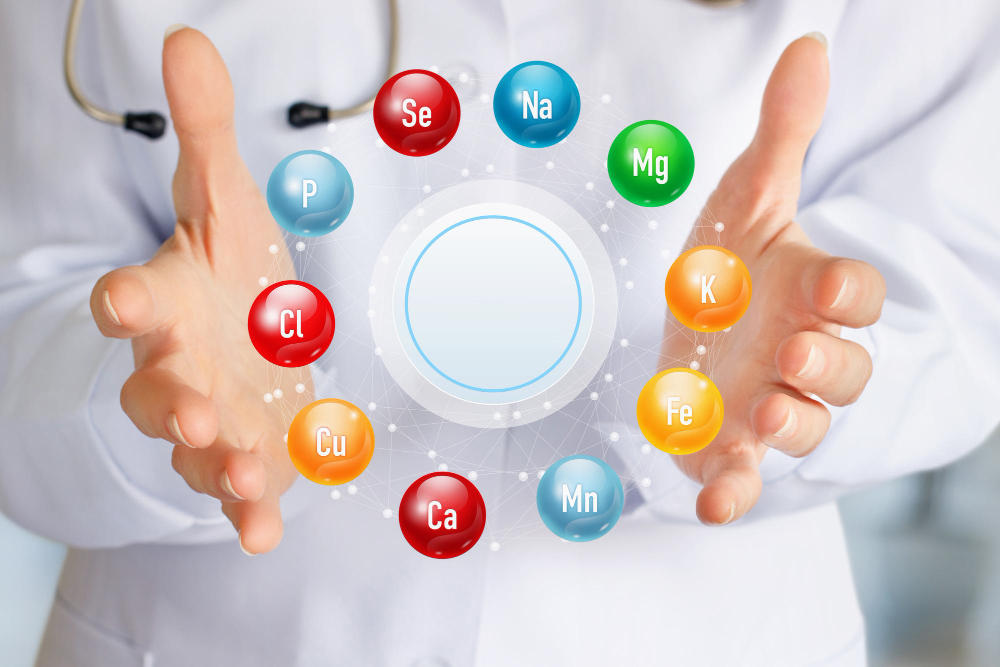
Magnesium, zinc, copper, calcium, and trace elements derived from marine, thermal spring, volcanic, and mineral-water sources are finding their way back into skincare.
Not because the market has suddenly become nostalgic.
But because skincare logic is changing.
Consumers are no longer focused only on:
Stronger renewal.
Higher concentrations.
More complicated active combinations.
They are beginning to value:
stability, barrier support, comfort, and the ability to maintain good skin condition over time.
This is why mineral skincare is being rediscovered.
I. Mineral Skincare Is Not New—But the Market Is Reinterpreting It
Minerals have been part of skincare for decades.
For example:
Thermal spring water
Deep-sea water
Dead Sea minerals
Volcanic minerals
Zinc salts
Magnesium salts
Traditionally, they were marketed around concepts such as:
Natural
Soothing
Pure
Thermal skincare
But premium skincare is now giving minerals a different role.
They are no longer just about natural origin.
They are becoming:
Functional Minerals.
Brands are beginning to ask not only:
Where does this mineral come from?
But:
What role does it play within the formulation system?
This is Mineral Skincare 2.0.
II. Why Are Minerals Gaining Attention Again in 2026?
1) The Market Is Moving from “High-Intensity Results” Back to Long-Term Stability
In recent years, the market has strongly favored high-performance actives:
Acids
Retinol
High-concentration vitamin C
Intensive ampoules
These products can create a strong perception of performance.
But consumers are also encountering another problem:
Skincare routines are becoming too complicated.
Too many actives are being layered together.
Skin can become dry or uncomfortable.
This is creating a new demand:
Instead of constantly pushing the skin, keep it more stable.
Minerals fit naturally into this direction.
2) Skin Longevity Is Making “Fundamental Functions” Important Again
The core philosophy of Skin Longevity is not about constantly asking the skin to do more.
It is about:
maintenance.
This is bringing renewed attention to:
Hydration
Barrier support
Antioxidant defense
Environmental stress management
Daily stability
Minerals fit naturally within this framework.
Instead of being secondary ingredients,
they can become:
a foundational module of Skin Longevity.
III. Different Minerals Play Completely Different Market Roles
Minerals should not be treated as a single ingredient category.
Different mineral elements can support completely different product stories.
1) Magnesium: A New Role in Stress-Affected Skin and Night Care
Magnesium is particularly suitable for positioning within:
Night skincare
Stress-affected skin
Comfort-focused products
The market language can focus on:
Comfort
Stability
Overnight recovery
Lifestyle stress management
It can be paired with:
NAD+-related concepts
Beta-glucan
Ceramides
Peptides
to create a complete night-care formulation.
2) Zinc: A Familiar Mineral for Balance and Freshness
Zinc is already well established in skincare.
Traditionally, it has been associated with:
Oily skin
Blemish-prone skin
Freshness
But its positioning can expand toward:
a balancing mineral.
Suitable categories include:
Scalp care
Oil-balancing serums
Summer creams
Men’s skincare
3) Copper: A Premium Player in Repair and Peptide Skincare
Copper naturally fits into premium skincare positioning.
Especially when associated with:
Copper peptides
High-performance serums
Mature skincare
It can support product concepts around:
Structural support
Elasticity management
Advanced repair
This gives copper stronger premium potential than many conventional mineral concepts.
4) Calcium: A New Narrative for Barrier and Dry-Skin Care
Calcium currently receives less attention in skincare.
But it fits naturally into:
Barrier management
Dry-skin care
Delicate-skin products
Especially when paired with:
Ceramides
Lipid systems
Hyaluronic acid
brands can create a complete concept around:
Mineral Barrier Care.
IV. The Real Opportunity Is Not a Single Mineral—It Is a “Mineral Complex”
The more commercially interesting direction may not be:
A magnesium serum.
A zinc serum.
A copper serum.
Instead, it may be:
Mineral Complexes.
For example:
Magnesium × Zinc × Copper
creating:
Stability × Balance × High-Performance Care
Or:
Calcium × Magnesium × Ceramides
creating:
Barrier × Comfort × Hydration
This transforms individual mineral ingredients into:
a mineral management system.
V. Mineral Skincare Also Fits the “Native Skin” Concept
Another skincare direction worth watching in 2026 is:
Native Skin.
The idea is not to constantly transform the skin into something else.
Instead, it focuses on:
maintaining the skin’s naturally balanced condition.
Minerals fit this concept particularly well.
Unlike highly intensive actives, they do not need to be positioned around aggressive transformation.
They are better suited to:
Daily maintenance
Gentle management
Barrier support
Comfort-focused care
Mineral skincare and the Native Skin concept may therefore grow together.
VI. How Can Brands Design Mineral Skincare Products?
Model A: Mineral Essence
Direction:
Light hydration × Trace minerals × Daily stability
Suitable for:
Younger consumers
Summer skincare
Minimalist routines
Model B: Mineral Barrier Serum
Direction:
Minerals × Ceramides × Beta-glucan
Suitable for:
Dry and delicate skin markets
Model C: Magnesium Night Care
Direction:
Magnesium Night Care
Potential combinations:
NAD+-related concepts
Peptides
Hyaluronic acid
Suitable for:
Late-night and stress-affected skin markets
Model D: Mineral Scalp Serum
Direction:
Zinc × Magnesium × Panthenol
Suitable for:
Oil balance
Freshness management
Daily scalp care
VII. The Best Format for Mineral Skincare May Not Be a Heavy Cream
If the market is going to rediscover minerals,
product format matters.
Some of the most suitable formats may actually be:
Essences
Serums
Gels
Mists
Lightweight creams
Scalp serums
The reason is simple.
Minerals naturally communicate:
Cleanliness
Clarity
Purity
Balance
An overly heavy texture could weaken that positioning.
VIII. OEM Development Consideration: Adding Mineral Salts Does Not Automatically Make It “Mineral Skincare”
This is an important point for product development.
A sophisticated mineral formula should first answer:
Why is this mineral included?
How does it interact with other ingredients?
Is the concentration appropriate?
Is the ionic environment stable?
Could it affect texture, viscosity, emulsification, or other actives?
Mineral salts can influence the overall formulation environment.
So mineral skincare is not about:
adding as many minerals as possible.
It is about:
creating the right balance between minerals and the complete formulation system.
IX. OEM Development Suggestions
Mineral hydration serum:
Magnesium × Hyaluronic acid × Beta-glucan
Mineral barrier serum:
Calcium × Ceramides × Lipid system
Oil-balancing serum:
Zinc × Niacinamide × Panthenol
Premium peptide serum:
Copper peptides × Hyaluronic acid × Antioxidant system
Night mineral longevity serum:
Magnesium × NAD+-related concepts × Peptides
Mineral scalp serum:
Zinc × Magnesium × Panthenol

Conclusion: The Return of Mineral Skincare Signals a Return to the Fundamentals
Minerals are not new ingredients that suddenly appeared in 2026.
What is new is:
how brands are beginning to understand them.
In the past:
Minerals represented nature, thermal springs, and purity.
Now, they are increasingly associated with:
Stability × Barrier Support × Balance × Long-Term Maintenance
This reflects a broader shift in the skincare market.
While brands continue to compete over products that are:
Stronger
More concentrated
Faster
consumers are beginning to ask another question:
Does skin really need that much?
The real meaning of “mineral replenishment” is therefore not about making skincare more complicated.
It is about returning to a more fundamental question:
How can we help skin remain comfortable, balanced, and stable over the long term?
That may be the real reason mineral skincare is being rediscovered in 2026.