
From Lather and Rinsing to the Feel of Skin After Drying, Winter Cleansing Deserves a Closer Look
A cleanser suited to the dry season should leave people feeling clean—and comfortable enough to want to use it again the next morning.
In winter, consumers often encounter two very different experiences.
Some cleansers produce generous foam and rinse away quickly, yet leave the cheeks feeling tight after drying.
Others leave skin feeling soft, but raise a question: did they really remove the day’s sunscreen, oil, and impurities?
This is the challenge in developing a winter cleanser. Consumers need to experience both a sense of cleanliness and comfort after washing. Neither can be achieved simply by increasing the foam or adding more featured skincare ingredients.
The entire routine matters: how the formula feels on contact, what happens when water is added, how easily it rinses, and how skin feels after it has been dried.
-
“Clean” and “Squeaky Clean” Are Different Experiences
Many people take post-wash tightness as proof that a cleanser works.
During the dry season, however, that sensation may not be the impression a brand wants to leave. Surfactants influence both cleansing and after-feel. Research has discussed the relationship between harsher cleansing systems and post-wash dryness or tightness.
A winter cleanser can aim for three things at once:
Remove everyday impurities and excess oil.
Rinse without leaving an unwanted slippery film.
Leave skin feeling comfortable after drying.
All three need to be assessed together. Cleansing power alone—or softness alone—does not tell the full story of how the product performs in use.

-
More Foam Is Not Always Better, and Less Foam Does Not Mean Less Cleansing
Foam strongly influences a consumer’s impression of a cleanser.
A rich, fine lather often suggests a thorough wash.
A low-foam or non-foaming texture may suggest a softer, more nourishing winter routine.
Yet foam volume is not a measure of cleansing performance on its own. Surfactant combinations, formula concentration, and method of use all affect the result. Research into cleansers also considers the complete formula and its interaction with skin, rather than judging it by foam alone.
Before choosing the lather, a brand can ask:
Does the intended consumer want a crisp rinse or a softer feel?
Is the product mainly for morning use, or must it remove the day’s sunscreen and buildup?
What skincare steps will follow cleansing?
The answers are more useful than assuming every winter cleanser must be low-foam.
-
Three Textures for Three Winter Cleansing Needs
1) Gel Cleanser: A Fresh, Easy-to-Rinse Experience
A gel can suit consumers who enjoy a water-light texture and a straightforward rinse.
It may be formulated with little foam or a moderate lather. The points to assess are how easily it spreads with water, whether it rinses cleanly around the nose and hairline, and how skin feels after drying.
Possible product message:
“A fresh gel that easily washes away everyday impurities, leaving skin feeling clean and comfortable.”
2) Milky Cleanser: A Softer After-Feel
A milky texture can express a winter concept built around dry-feeling skin.
Softness should not come at the expense of rinsability. If the product leaves a film consumers do not enjoy, they may wash again—undermining the comfortable experience the formula was designed to provide.
Possible product message:
“A smooth, milky texture that cleanses while leaving skin feeling soft and comfortable.”
3) Fine-Foam Cleanser: A Clean Feel With a Softer Impression
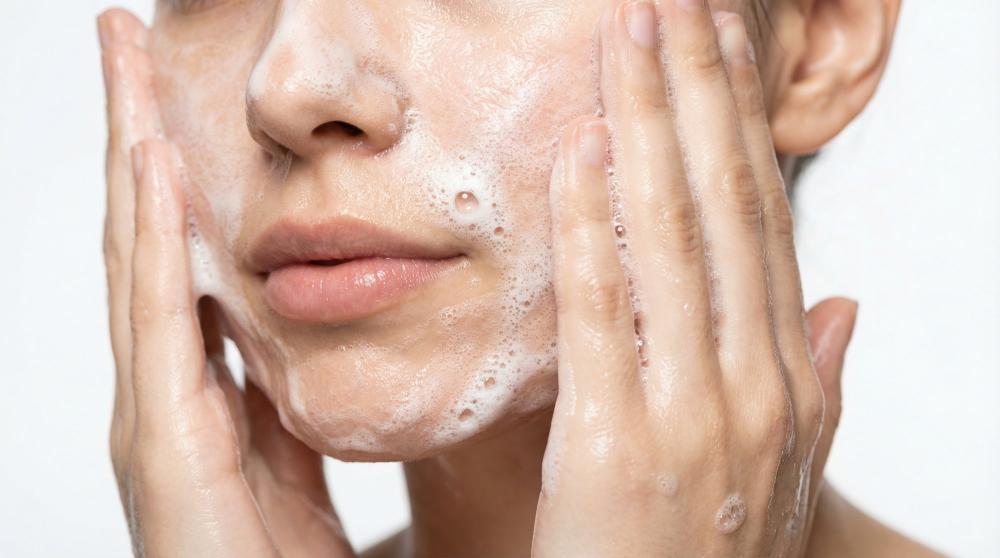
A foaming cleanser does not have to be positioned as an aggressive wash. Fine foam that rinses easily can also suit a winter concept.
For this format, it is particularly important to confirm that the after-feel matches any promise of comfortable cleansing.
Possible product message:
“Fine foam surrounds the skin, washing away everyday impurities for a clean, comfortable finish.”
None of these textures is automatically superior. The differences need to be confirmed through testing the finished products.
-
Moisturizing Ingredients Can Be Added, but Cleansing Still Leads
Dry-season cleansers often feature glycerin, panthenol, hyaluronic acid (HA), or other moisturizing ingredients.
They can support a softer product concept. A cleanser, however, is rinsed off. Its experience also depends on the cleansing system, overall structure, amount used, and rinsing conditions.
A product promoted as containing “multiple moisturizing ingredients” still needs to answer a practical question:
Does skin feel comfortably soft after washing, or does the formula leave an unwanted residue?
Instead of filling the front of the pack with ingredient names, develop the intended after-feel first. Then highlight the ingredients that best explain the formula.
PDRN or another attention-getting ingredient could also give a cleanser a place in a wider range. Its inclusion in a rinse-off product does not mean the cleanser can carry the same performance claims as a leave-on serum.
-
Rinsing Is an Overlooked Part of the Experience
The cleansing experience does not end when the foam forms.
Consumers also notice:
How long does rinsing take?
Does product remain around the nose or hairline?
Does skin feel clean, soft, or so slippery that it seems insufficiently rinsed?
A few minutes after drying, do the cheeks begin to feel tight?
These details may determine whether someone continues using the product. Cleanser research has also identified rinsability and residue as factors worth considering.
Testing a sample only by lathering it on the back of a hand will miss much of this. Face-use trials following the intended directions can capture impressions during rinsing and after drying. Morning and evening use may also produce different feedback.
-
An OEM/ODM Approach: Define the Cleansing Moment First
Winter cleansers can take different directions. They do not all need to be called “moisturizing repair cleansers.”
Concept A: Light Morning Cleanse
Positioning: Cleanse skin after sleep and prepare it for the morning routine.
Format: Low-foam gel or smooth milky texture.
Development focus: Easy rinsing and a comfortable after-feel that works with subsequent skincare, sunscreen, and makeup.
Concept B: Comfortable Evening Cleanse
Positioning: Remove the day’s impurities and excess oil.
Format: Gel or fine-foam cleanser.
Development focus: Confirm cleansing performance and assess skin feel after drying. If the product claims to remove sunscreen or makeup, test it against the types it is intended to remove.
Concept C: Soft Winter Cleanse
Positioning: Serve consumers who particularly dislike a tight, dry after-feel.
Format: Milky or cream cleanser.
Development focus: Balance softness with a satisfying rinse, so consumers do not feel the need to wash again.
The distinction between these proposals is the cleansing moment each one serves—not which product contains the longest list of skincare ingredients.

-
How Should Winter Cleanser Copy Be Written?
The most useful cleanser copy describes qualities consumers can recognize for themselves:
Easy to spread.
Fine lather.
Easy to rinse.
A clean, soft, comfortable after-feel.
For example:
“Start winter skincare with a comfortable cleanse. A smooth texture washes away everyday impurities and leaves skin feeling clean, without a tight after-feel.”
More specific claims, such as “long-lasting hydration” or a defined barrier benefit, should be supported by evidence for the finished rinse-off product. Evidence relating only to one ingredient is not enough to establish the performance of the cleanser. Taiwan’s cosmetic claim regulations assess the overall message and may consider unsupported claims false or exaggerated.
Conclusion: A Good Winter Cleanser Makes the Next Wash Feel Welcome
Dry-season cleansers do not have to choose between a satisfying clean and a comfortable after-feel.
Gels, milky formulas, and fine-foam cleansers can each have a place in winter skincare. The key is to design the cleansing system, lather, and rinse together, then check how skin feels after the finished product has been washed off.
A cleanser’s most memorable quality may be what skin feels like after the washing is done.