
Understanding the New Generation of “Skin Longevity Capsules” and Mitophagy Technology
From active encapsulation to controlled delivery and mitochondrial quality management, premium skincare is redefining longevity
When people hear the term “longevity capsule,” the first thing that often comes to mind is a dietary supplement.
But in the new generation of premium skincare, the word “capsule” is beginning to mean something completely different.
It does not necessarily refer to something you swallow.
Instead, it can describe:
a topical delivery system that encapsulates high-performance actives and releases them gradually during application.
This concept is now converging with another emerging direction in 2026 skincare:
Mitophagy.
As Skin Longevity evolves from an anti-aging concept into a distinct premium skincare category, the conversation is expanding beyond wrinkles, firmness, and collagen.
The market is beginning to explore oxidative stress, mitochondrial function, active preservation, and long-term skin condition.
This is creating an entirely new product opportunity for:
Skin Longevity Capsules.
I. What Exactly Is a “Skin Longevity Capsule”?
In skincare, the core concept behind capsules is:
Encapsulation.
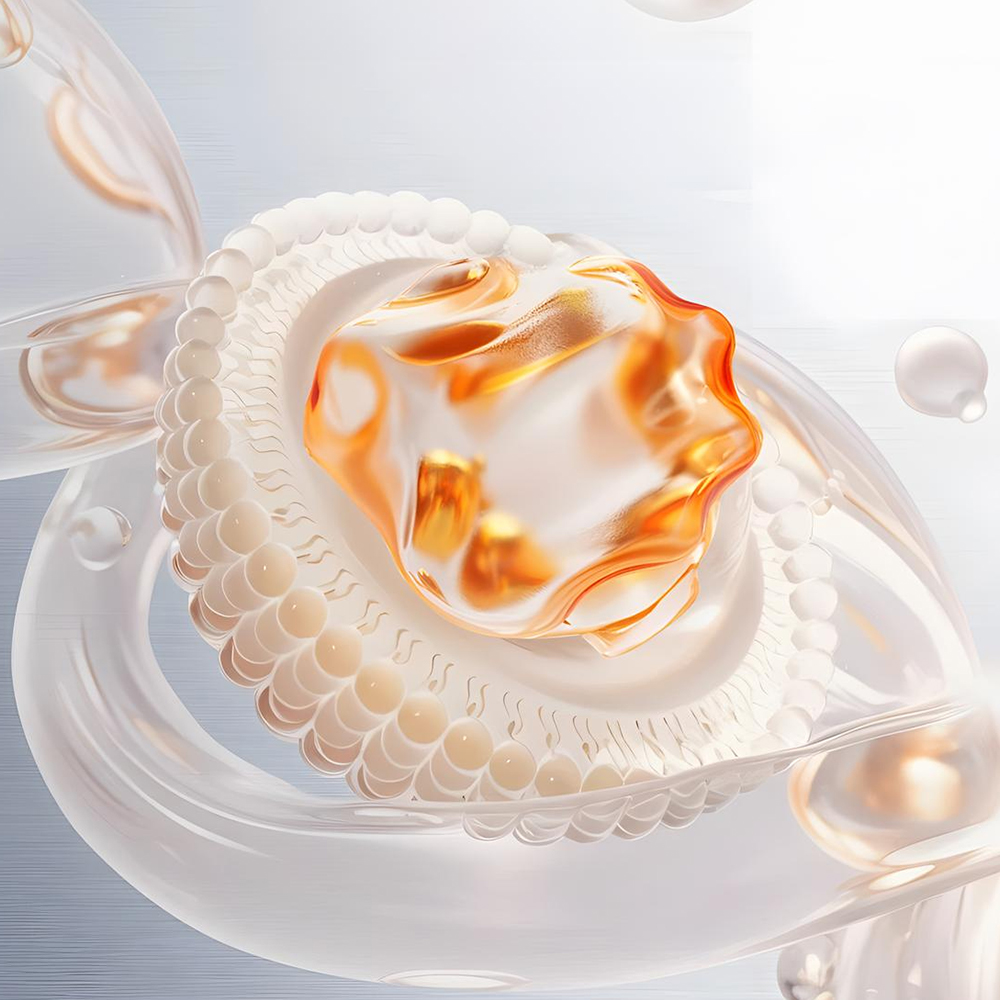
In simple terms, selected active ingredients are enclosed within a delivery carrier and released under specific conditions during application.
This approach can address several common challenges in high-performance formulations:
- Oxidation-sensitive actives
- Ingredient compatibility issues
- Limited stability within complex formulations
- Uncomfortable sensory characteristics of certain raw materials
- The need for controlled or gradual release
Therefore, the real value of a longevity capsule is not its visible capsule appearance.
It is about:
how active ingredients are preserved, carried, and released.
As skincare formulations become more sophisticated, delivery architecture itself is becoming an important part of product development.
II. Why Are Capsules Becoming Connected to Skin Longevity?
Traditional anti-aging formulation often begins with one question:
What ingredients should we add?
Skin Longevity goes one step further:
Can those ingredients remain in optimal condition until they are actually used?
That difference is significant.
Skin Longevity is fundamentally about long-term maintenance.
This means product development must also consider:
Preservation
Stability
Delivery
Release
As a result, encapsulation, lipid carriers, microspheres, and other advanced delivery technologies are becoming increasingly relevant to longevity-focused skincare.
This represents an important shift:
from ingredient competition to delivery-system competition.
III. Why Is Mitophagy Becoming a Skin Longevity Keyword?
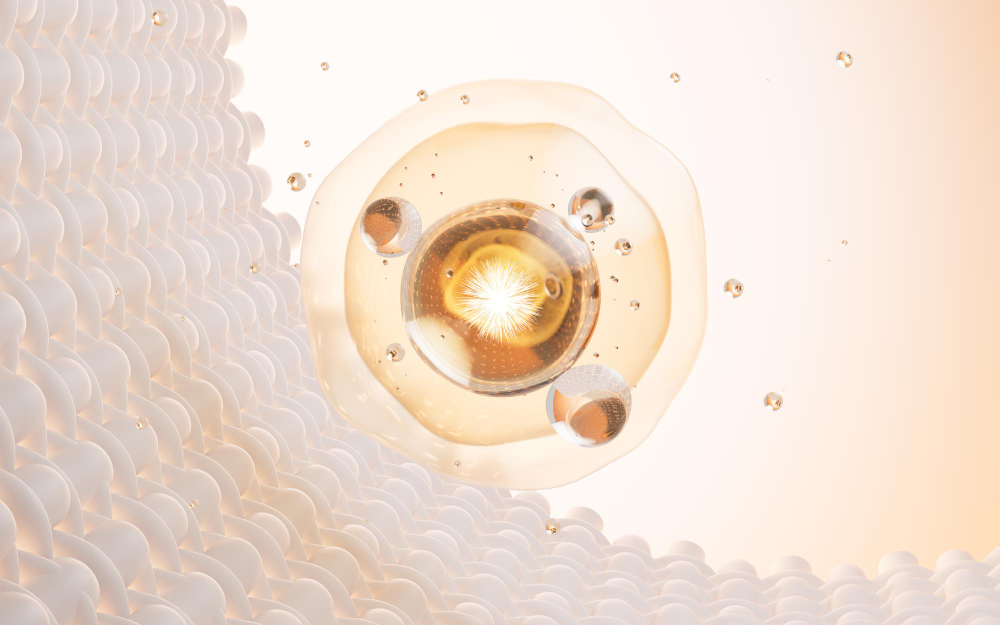
To understand this market direction, we first need to understand mitochondria.
Mitochondria are often simplified as:
the energy factories of the cell.
But their role goes beyond energy production.
Mitochondrial condition is closely connected with oxidative stress, metabolic balance, and biological mechanisms associated with aging.
This is where mitophagy becomes important.
In simplified terms, mitophagy can be understood as:
a selective quality-control process that removes damaged or dysfunctional mitochondria.
The concept is not simply about producing more mitochondria.
It is about:
maintaining better mitochondrial quality.
And that fits naturally with the philosophy of Skin Longevity.
IV. From “Adding Energy” to “Managing the Energy System”
Traditional cellular-energy skincare often focuses on ingredients and concepts such as:
NAD+
Coenzyme Q10
Vitamins
Antioxidants
The central idea is:
replenishment.
Mitophagy introduces another dimension:
quality management.
This means the next generation of longevity skincare may evolve beyond simply supporting energy.
It may instead be structured around:
Energy Support × Oxidative Stress Management × Mitochondrial Quality Management
This creates a more sophisticated narrative for premium skincare.
However, there is an important distinction for brands:
Mitophagy can provide a strong research and formulation concept, but scientific terminology should not automatically be translated into direct cosmetic efficacy claims.
Mechanistic research and proven consumer-facing cosmetic benefits are not necessarily the same thing.
V. How Can “Longevity Capsules × Mitophagy” Be Translated into Products?
This is where the concept becomes commercially interesting.
Capsules provide the:
Delivery.
Mitophagy provides the:
Mechanism Story.
Together, they can create a complete premium product architecture.
Model A: Microcapsule Longevity Serum
Product concept:
Visible microcapsules suspended in a transparent serum,
releasing their contents during application.
The capsules could carry ingredients such as:
Coenzyme Q10
Resveratrol
Oil-soluble antioxidants
While the water phase could incorporate:
NAD+-related concepts
Peptides
Hyaluronic acid
Market advantage:
Visual Impact × Technology Appeal × Premium Perception
This format is particularly suitable for a hero product.
Model B: Nighttime Mitochondrial Management Ampoule
Nighttime is one of the strongest usage scenarios for longevity positioning.
The product could be developed around the concept of:
Night Longevity Concentrate
Core architecture:
NAD+-related concepts
- Antioxidant system
- Peptides
- Mitochondrial management concepts
Instead of communicating only:
“overnight repair,”
the concept can evolve toward:
overnight quality management.
Model C: Bi-Phase Longevity Capsule Serum
One phase carries:
Water-soluble actives.
The second phase carries:
Oil-soluble antioxidants.
A capsule delivery system can then add a third structural layer:
Water Phase × Oil Phase × Encapsulated Actives
This type of architecture is particularly suitable for premium brands.
Consumers can visually understand that the product is different from a conventional serum before they even apply it.
Model D: Longevity Capsule Cream
Another promising direction is:
visible microcapsules suspended within a cream or gel-cream base.
For example:
Gel-cream base
- Active microbeads
The microbeads dissolve or break during application.
Instead of positioning it as another conventional anti-aging cream,
the product can become:
Skin Longevity Capsule Cream
This creates a more contemporary premium narrative than simply emphasizing richness or firmness.
VI. Which Ingredients Fit the “Skin Longevity Capsule” Concept?
Not every ingredient needs to be encapsulated.
The first question should always be:
Why encapsulate it?
Antioxidant Category
For example:
Coenzyme Q10
Resveratrol
Vitamin C derivatives
Vitamin E
Core concept:
Managing oxidative stress associated with environmental exposure.
Lipid Category
For example:
Ceramides
Squalene
Botanical lipids
Core concept:
Supporting barrier condition and skin softness.
High-Performance Category
For example:
Peptides
NAD+-related ingredients
PDRN
Core concept:
Building a more complete Skin Longevity formulation story.
However, whether a specific ingredient is suitable for a particular encapsulation technology must depend on its molecular properties, stability profile, compatibility, and manufacturing process.
Ingredients should not be placed into the same delivery carrier simply because they fit the marketing concept.
VII. The Biggest Brand Mistake: Turning “Mitophagy” into Another Anti-Aging Buzzword
This will be an important consideration for brands entering the Skin Longevity market.
It is easy to create a message such as:
Mitophagy Technology
→ Extends Skin Lifespan
But this oversimplifies the science.
A more sophisticated approach is to build the product around:
Scientific Concept × Formulation Architecture × User Experience
For example:
Antioxidant system
- Energy-related concept
- Encapsulated delivery
- Nighttime usage scenario
This creates a much stronger reason for consumers to understand:
why this is a Longevity Product.
VIII. OEM Development Suggestions
Cellular Energy Longevity Serum:
NAD+-related concepts × Coenzyme Q10 × Peptides
Mitochondrial Concept Night Ampoule:
Mitochondrial quality-management concept × Antioxidant system × Peptides
Longevity Capsule Serum:
Encapsulated antioxidants × NAD+-related concepts × Hyaluronic acid
Longevity Capsule Cream:
Encapsulated lipids × Ceramides × Peptides
Premium Skin Longevity System:
Morning antioxidant serum × Nighttime mitochondrial-concept ampoule × Longevity capsule cream
Conclusion: The Next Stage of Longevity Skincare Is Not Just About “What to Add”—But How to Preserve, Deliver, and Manage It
The most interesting aspect of Skin Longevity Capsules is not bringing a supplement concept into skincare.
It represents a new way of thinking about premium formulation:
Active Preservation × Advanced Delivery × Energy Management × Long-Term Skin Condition Maintenance
Mitophagy adds another dimension to this concept.
Traditional anti-aging often asks:
How can we make skin do more?
Skin Longevity begins to ask:
How can we support better quality management over time?
This may become one of the defining differences between Skin Longevity and traditional Anti-Aging in 2026.
The most sophisticated longevity product of the future may not be the formula with the most ingredients.
It may be:
the one that best understands how to preserve actives, design delivery systems, and build a coherent longevity strategy.